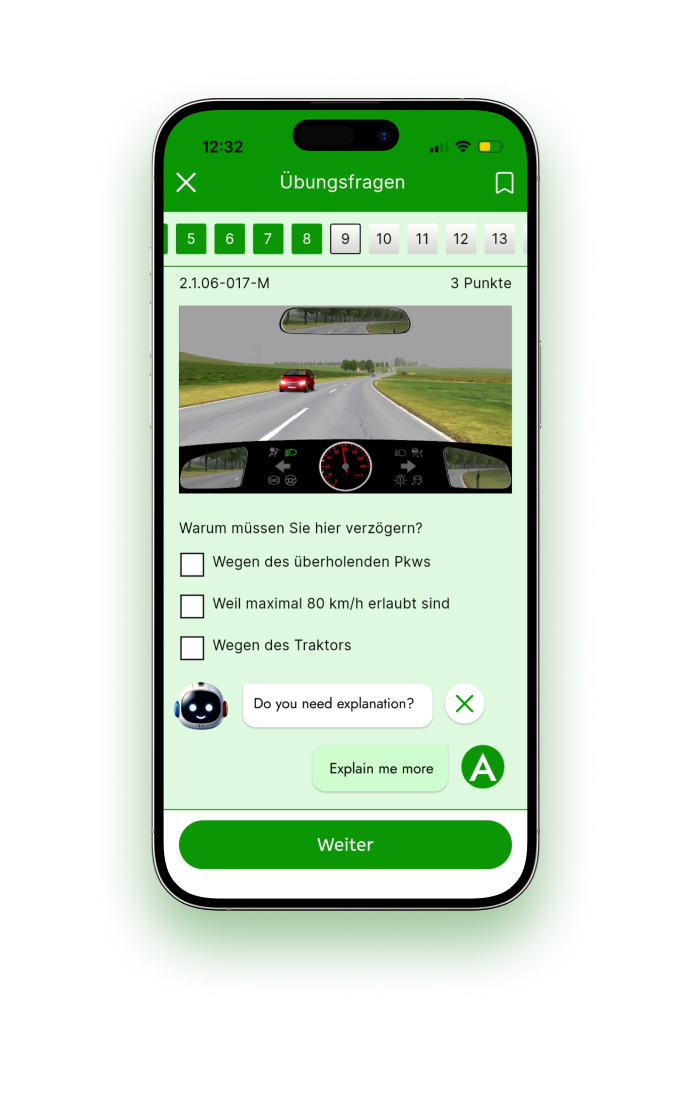
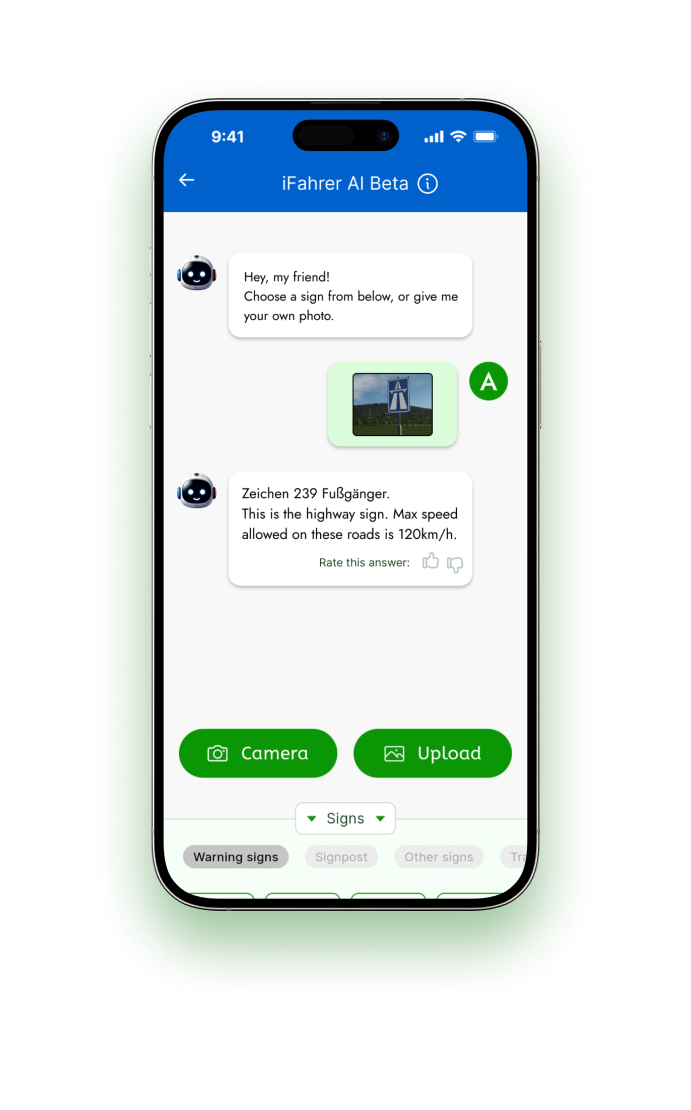
Get ready for your license test with AI assistance!
While driving, you use the adaptive cruise control (ACC). The speed is set to 100 km/h. What must you be prepared for before entering a bend in the road?
The ACC may cause my vehicle to accelerate
I have to adjust my speed to the situation
The ACC will prompt me to reduce my speed
Here is Our AI Assistant's Explanation
With ACC set to 100 km/h, you still remain fully responsible for choosing a safe speed, especially before bends. ACC is primarily designed to keep a set speed and maintain distance to a vehicle ahead; it does not reliably “read” every curve and automatically choose the correct cornering speed for road layout, visibility, wetness, or surface condition.
Answer 1 is correct because, depending on the system and situation, ACC can accelerate to get back to the set speed if it thinks the lane is clear or after a slight deceleration. If you approach a bend too fast and the car starts accelerating again to reach 100 km/h, that can be unsafe. So you must always be ready to override ACC with the brake or by reducing the set speed.
Answer 2 is correct because the basic rule in Germany is that your speed must always be adapted to the situation (road course, visibility, weather, traffic). A bend often requires reducing speed before entering, even if the legal limit is higher and even if ACC is active. In practice: ease off by lowering the set speed early or brake gently; don’t wait for the system.
Answer 3 is not correct because ACC does not necessarily prompt you to slow down for a bend. Some cars may show a warning in certain cases, but you cannot rely on it. Rule of thumb: treat ACC as comfort assistance on straight/steady sections; before bends, junctions, unclear situations, or changing conditions, you proactively adjust speed yourself and be ready to intervene immediately.